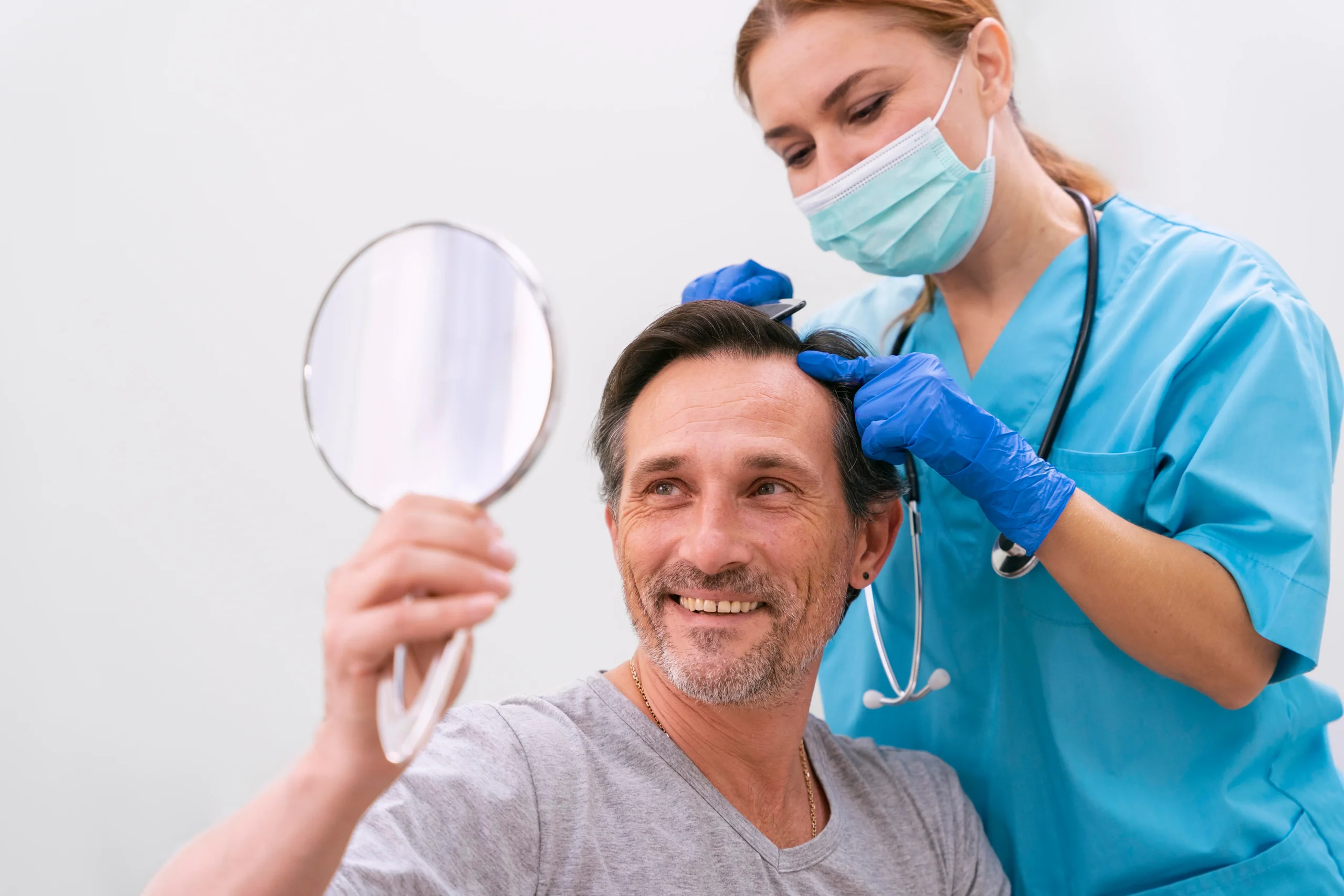

FUE (Follicular Unit Extraction) is a hair transplant method where individual grafts are extracted from a donor area (usually the back and sides of the scalp) and implanted into thinning areas. It is widely used because it can treat larger zones efficiently while keeping donor-area scarring very small.
At MedMedicals in Istanbul, the plan is individualized. You can ask about any combination (hairline, mid-scalp, crown, density refinement, or a staged plan). Your final graft plan is confirmed after assessment, not guessed from a template.
FUE can:
Restore a natural hairline and improve density in thinning areas
Fill mid-scalp and, in selected cases, the crown
Improve the appearance of thinning when donor supply is adequate and planning is realistic
FUE cannot:
Create unlimited density (donor grafts are limited)
Stop future hair loss (your non-transplanted hair can continue thinning)
Replace medical evaluation for scalp conditions (if present)
FUE Hair Transplant: €1,200
Important note
Price is for unlimited grafts!
Hair and scalp assessment and treatment planning
FUE procedure as agreed in your confirmed plan
Standard anesthesia and clinic or hospital costs for the procedure
Post-procedure check(s) during your medical stay
Written aftercare instructions and recovery guidance
Flights
Hotel accommodation
Transfers and local transport
Extra nights outside the medical plan
Additional procedures or extra sessions not listed in your confirmed plan
Hotels and transfers are not included. If you want, we can arrange hotel options and private transfers based on your dates and preferences, quoted separately.
Tell us what bothers you most (hairline, temples, mid-scalp, crown, overall thinning). We will review your case and confirm a realistic graft plan and timeline.
To speed up your evaluation, include:
Your age and how long hair loss has been progressing
Areas you want treated (hairline, temples, crown)
Any previous hair transplant (if applicable)
Medications or treatments you use (if any)
Clear photos: front hairline, both temples, top, crown, and donor area
Method: individual graft extraction and implantation
Shaving: often required for donor area, recipient area depends on the plan
Procedure time: varies by graft count and zones treated
Recovery: swelling and redness early, shedding phase is expected
Results timeline: gradual, varies by person and plan
You may be a good candidate if:
You have stable donor hair at the back and sides
You want hairline and density improvement with realistic expectations
Your hair loss pattern is predictable enough to plan safely
You can follow aftercare and accept the shedding and regrowth timeline
FUE may be delayed or not recommended if:
Donor density is very limited
You have active scalp inflammation or untreated skin conditions
Hair loss is very aggressive and the long-term plan is unclear
Expectations require more density than your donor can safely provide
FUE is a structured process with planning as the most important step.
We assess donor density, hair caliber, and safe extraction limits to protect the donor area visually.
We design a hairline that fits your face and age and plan density by zone so the result looks natural long-term.
Grafts are extracted one by one, then implanted into prepared sites according to angle and direction planning.
We confirm zones, target density, and a realistic graft estimate. If a staged approach is safer, we explain why.
The donor area is prepared and local anesthesia is applied.
Grafts are extracted carefully to minimize donor thinning.
Grafts are implanted according to the planned angles and directions to avoid an artificial look.
You receive written aftercare and clear instructions for washing, sleeping, activity, and what is normal during healing.
Redness and mild swelling can occur
Scabbing forms and begins to resolve with proper washing
Sleep positioning matters, follow instructions strictly
Shedding of transplanted hairs is common and expected
The scalp looks calmer while follicles enter a resting phase
Early regrowth begins, density builds gradually
Most visible improvement appears progressively
Final maturation can continue beyond, case dependent
Density is not only about graft count, it is about distribution, hair caliber, donor limitations, and long-term planning. The best results come from:
a natural hairline design
sensible density by zone (not overloading one area)
protecting donor appearance for the future
If you want maximum density everywhere, that often conflicts with donor limitations. A realistic plan prevents disappointment.
All procedures carry risk. Risks can include infection, prolonged redness, swelling, shock loss of existing hair, uneven growth, scarring in the donor area, and the possibility of needing refinement later.
If you have medical conditions or take medications, share them. Safety planning depends on it.
Send photos and basic history so we can confirm whether FUE is suitable and what zones are realistic.
Consultation, procedure, and post-procedure check(s) are planned to fit your stay.
You receive aftercare guidance and you can send photos and questions during recovery.
Flights, hotels, and transfers are not included. If you want, we can arrange hotel options and private transfers as an add-on, quoted separately.
International patient coordination from assessment to follow-up
Planning focused on natural design and donor protection
Clear expectations on density and timeline
Transparent included and not included items
Not universally. FUE is often efficient for larger areas, DHI can be useful for controlled placement in selected cases. Your anatomy and goals decide.
Early shedding is common. Regrowth builds gradually over months.
It depends on your zones, donor density, and desired density. We confirm after photo review and consultation.
Use the form above and send the requested photos. We will propose a realistic plan and timeline.
Often chosen when you want very controlled placement in smaller zones or hairline refinement.