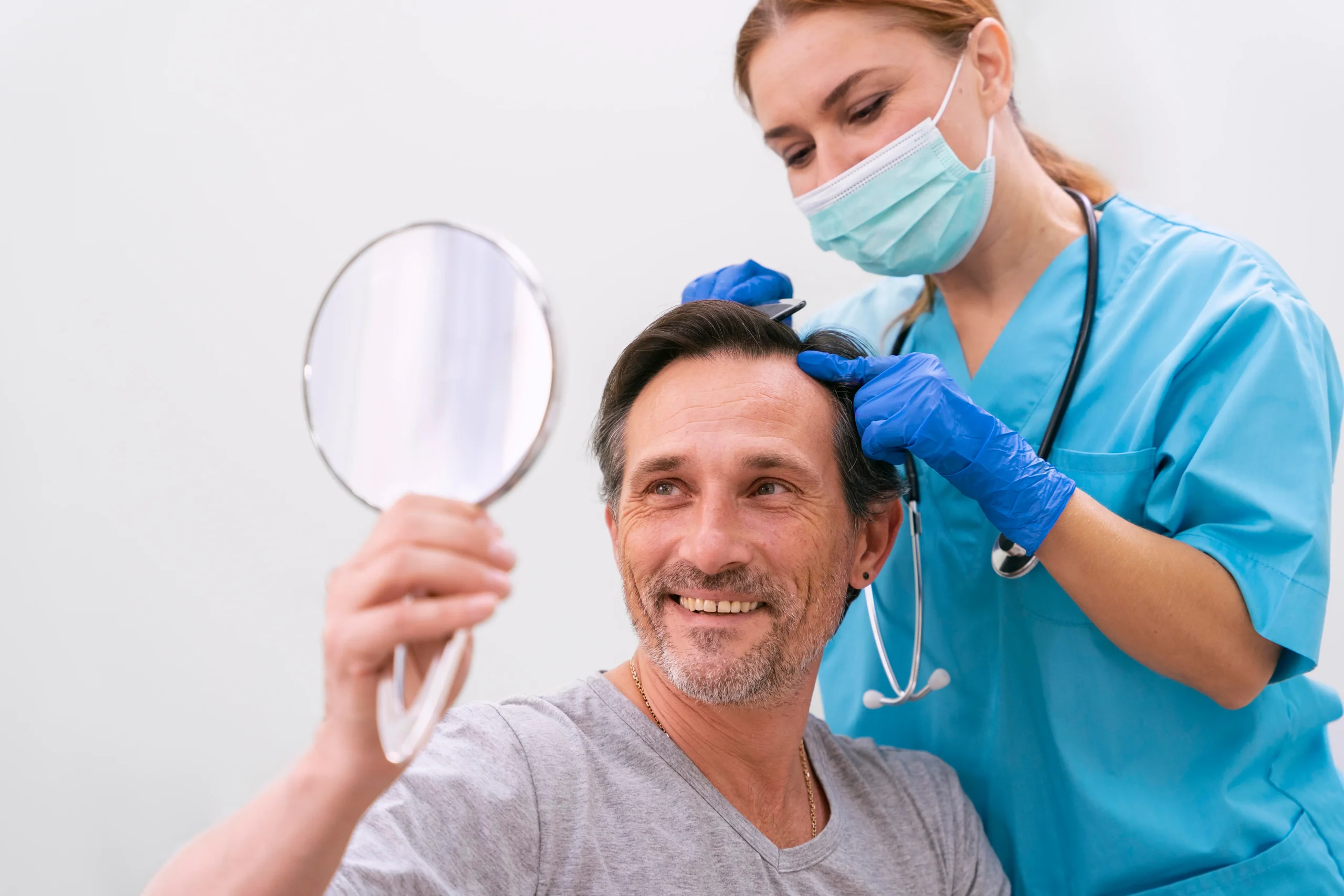

DHI (Direct Hair Implantation) is a hair transplant approach where extracted grafts are implanted using an implanter tool that places grafts directly into the scalp. This method is often chosen when patients want very controlled placement, particularly for hairline detail work or smaller zones where angle and direction precision are the priority.
At MedMedicals in Istanbul, DHI planning is personalized. You can ask freely about combinations and refinements (hairline design, temple points, density touch-ups, or staged planning). Your final plan is confirmed after assessment.
DHI can:
Improve hairline definition with precise angle control
Increase density in selected zones where careful placement matters
Support refinement work when a patient wants detail-focused outcomes
DHI cannot:
Create unlimited density beyond donor limitations
Stop future thinning in non-transplanted hair
Replace a long-term plan for progressive hair loss
DHI Hair Transplant: €1,200
Important note
This is a reference package price. The final plan depends on your donor capacity, the zones treated, and whether a staged plan is more realistic. If your case is better suited for FUE due to area size, we will say so.
Hair and scalp assessment and treatment planning
DHI procedure as agreed in your confirmed plan
Standard anesthesia and clinic or hospital costs for the procedure
Post-procedure check(s) during your medical stay
Written aftercare instructions and recovery guidance
Flights
Hotel accommodation
Transfers and local transport
Extra nights outside the medical plan
Additional procedures or extra sessions not listed in your confirmed plan
Hotels and transfers are not included. If you want, we can arrange hotel options and private transfers based on your dates and preferences, quoted separately.
Tell us what your priority is (hairline detail, temples, density refinement, crown, or overall thinning). We will confirm whether DHI is appropriate and propose a realistic plan.
To speed up your evaluation, include:
Your age and how long hair loss has been progressing
Areas you want treated (hairline, temples, crown)
Any previous hair transplant (if applicable)
Medications or treatments you use (if any)
Clear photos: front hairline, both temples, top, crown, and donor area
Method: graft implantation using an implanter tool
Shaving: varies by plan, donor area is commonly trimmed
Procedure time: varies by graft count and zone complexity
Recovery: early redness and scabbing, shedding phase is expected
Results timeline: gradual regrowth over months, case dependent
This is where many pages become misleading, so keep it simple and honest.
Focuses on controlled placement using an implanter tool
Often selected for detail-focused work or smaller zones
Useful when placement precision is the main priority
Describes the extraction method, and is commonly used for larger area coverage
Often efficient when the goal is broader restoration
Can still produce natural results when planning is done well
The “best” method is the one that fits your donor, zones, and realistic density goals.
You may be a good candidate if:
Your priority is hairline detail, direction control, or a smaller treatment zone
You have adequate donor density for your goals
You want improvement with realistic density expectations
You can follow aftercare and accept the regrowth timeline
DHI may be delayed or not recommended if:
The area to cover is very large and another approach is more efficient
Donor density is limited
You have active scalp inflammation or untreated skin conditions
Expectations require more density than donor supply allows
Zones, density priorities, and a realistic graft estimate are confirmed.
Donor preparation and local anesthesia.
Grafts are extracted carefully to protect donor appearance.
Grafts are placed with controlled angle and direction based on the design plan.
You receive written aftercare and clear guidance on washing, sleeping, and activity.
Redness and mild swelling can occur
Scabbing forms and resolves with correct washing
Shedding of transplanted hairs is common and expected
The scalp looks calmer while follicles rest
Early growth begins and gradually increases
Density and texture improve progressively
Final maturation can continue beyond, case dependent
The biggest predictor of satisfaction is not the acronym, it is planning realism:
donor limitations are respected
density is prioritized where it matters most
future hair loss is considered
If you want a dense hairline plus full crown coverage in one session, that is often unrealistic. A staged plan is sometimes the smarter option.
Risks can include infection, prolonged redness, swelling, shock loss of existing hair, uneven growth, scarring in the donor area, and the possibility of needing refinement later.
Share your medical history and medications. Safety planning depends on it.
Send photos and your history so we can confirm if DHI fits your goals, or if FUE is more appropriate.
Consultation, procedure, and post-procedure check(s) are scheduled to fit your stay.
Aftercare guidance continues, and you can send photos and questions during recovery.
Flights, hotels, and transfers are not included. If you want, we can arrange hotel options and private transfers as an add-on, quoted separately.
International patient coordination from assessment to follow-up
Planning focused on natural direction and hairline design
Clear expectations on density and timeline
Transparent included and not included items
Not automatically. Density depends on donor supply, planning, and safe graft placement, not the label.
Some patients use medical therapy to protect existing hair, but it depends on your case. We advise after assessment.
Use the form above and send the requested photos. We will propose a realistic plan and timeline.
Often chosen when broader coverage is needed across larger zones.